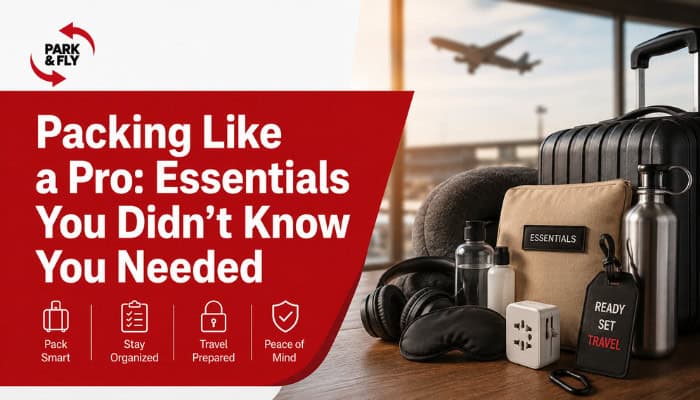
Ever opened your suitcase at your destination only to realise you forgot something important? Or worse, packed everything you thought you needed but still felt unprepared?
It’s not something you planned for, but it happens to the best of us. After years of helping Sydney travellers get to the airport stress-free, we’ve seen every packing disaster you can imagine.
But if you learn how to pack like a pro, you’ll never feel unprepared again.
In this article, we’ll walk you through:
- Packing cubes and carry-on essentials that prevent travel stress
- Multi-purpose clothing and fabric choices for efficient packing
- Unconventional items that solve unexpected problems
- Document security and backup strategies for worry-free travel
Grab a cuppa and let’s help you learn the art of professional packing.
The Ultimate Packing List: Beyond the Basics
The difference between amateur and professional packing comes down to three things: organisation systems, carry-on strategy, and personal backup items.
These elements separate the stressed travellers from those who sail through their journey feeling prepared. However, most travellers only pack the obvious stuff like clothes and toiletries, and later regret missing the small things that make travel easier. You don’t have to be one of them if you follow these proven methods.
Here’s what separates the pros from everyone else:
Packing Cubes and Other Organisers
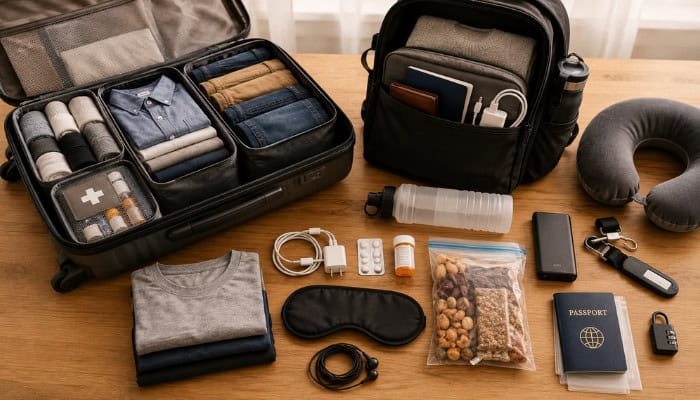
The best thing about packing cubes is that they let you find anything in seconds. Your luggage becomes a filing system where everything has its place because each cube holds one type of item.
Here’s how to set it up: start with one cube for underwear and socks, then use another for shirts, and a third for pants. When you pack this way, you’ll never waste time hunting for clean clothes. Also, extra packing cubes work perfectly for dirty laundry separation during your trip.
In case of emergencies, pack a small first aid kit in a separate cube. When you need Band-Aids or pain relief, you won’t be digging through your entire luggage like you’re searching for buried treasure.
The Carry-On Bag Essentials
Think of your carry-on bag as your survival kit. What we mean is this: if your checked luggage goes missing, your carry-on should keep you comfortable for at least 24 hours.
Always pack these essentials in your day bag:
- A change of clothing
- Phone charger and cables
- Daily medications
- Important document copies
- Snacks for long flights
The reason this works is simple. Airlines lose bags more often than they admit. So if your main luggage disappears, your carry-on keeps you going until it shows up again.
The Personal Items You’ll Be Glad You Packed
What’s the difference between a good trip and a great one? Often, it’s the small personal items you remembered to bring.
For example, take a collapsible water bottle. This simple item keeps you hydrated without paying airport prices for drinks.
Another clever choice is a luggage scale that saves you from surprise baggage fees at check-in by letting you weigh your bag at home first. Your personal item bag should also include a portable phone battery because nothing ruins travel plans like a dead phone when you need directions most.
Though these items might seem minor, they prevent major headaches like dehydration or getting lost when you’re far from home.
As you now know the essentials, your wardrobe choices become the next important step. Let’s look at how clothing decisions affect everything from comfort to practicality on your next trip.
Perfecting Your Wardrobe for Your Next Trip
Clothes take up most of your suitcase space, so every piece needs to work harder than normal. You have to avoid packing single-use items and instead choose pieces that handle multiple jobs.
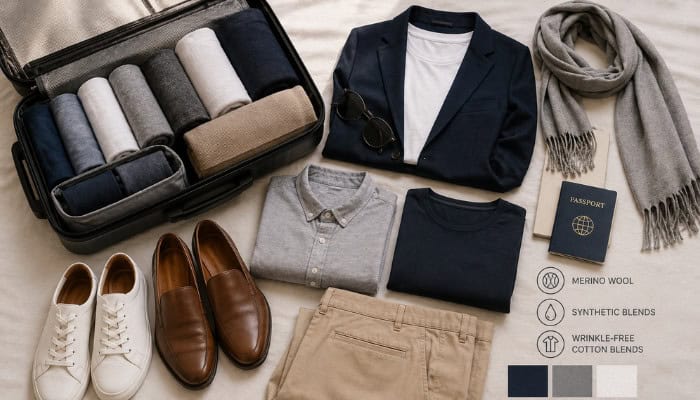
After all, good wardrobe planning means you can pack less while still looking sharp and feeling comfortable throughout your entire trip.
Follow these wardrobe strategies for efficient clothing selection:
Multi-Purpose Clothing and Accessories
If you’re serious about efficient packing, every clothing item should serve at least two purposes. For instance, pack a blazer that works for business meetings and casual outfits at dinner. Also, your footwear strategy should focus on one pair of shoes that looks good with everything you brought.
Even a lightweight scarf works as an accessory, a plane blanket, and a hotel room pillow. When you think this way, you’ll pack half as much but still have everything you need from day trips to formal dinners.
Helpful Tip: Roll your clothes instead of folding them. In this way, you save valuable suitcase space and prevent wrinkles, too.
The Right Travel Fabrics
When choosing what to pack, fabric choice can make or break your packing efficiency. The reason is that some materials work much better for travel than others (yeah, it’s true).
While planning for a shorter trip, you’ll need clothes that can be worn multiple times, dry quickly, and take up less space in your suitcase than cotton. These materials are built for frequent travellers who need reliable performance.
Choose these materials for your next trip:
- Merino wool t-shirts (they can be worn multiple times without washing)
- Synthetic blends (dry quickly, so you can wash and wear the same day)
- Wrinkle-free cotton blends (look professional without ironing)
We suggest sticking to a basic colour palette like navy, grey, and white. This ensures everything matches, so you always look put-together without overthinking outfit combinations.
Once you know how to pack the right clothes efficiently, there are some surprising items that can make your journey much smoother.
Unconventional Items for a Smooth Journey
What separates seasoned travellers from everyone else when it comes to packing? Well, they know that some of the most useful items aren’t found on typical travel checklists. These unconventional essentials solve problems you didn’t even know you’d have.
Here’s where organisation becomes your best friend when you’re living out of a bag for days or weeks. You may find that a handy shower caddy gives you your own personal spa setup in any hotel room bathroom.
Before you head out, always pack a few extra zip-lock bags to handle wet swimwear, snacks, and keep your phone dry during unexpected rain. Plus, your carry-on bag should include a small roll of duct tape wrapped around a pencil. This tiny addition fixes broken luggage zippers, torn packing cube corners, and countless other travel emergencies.
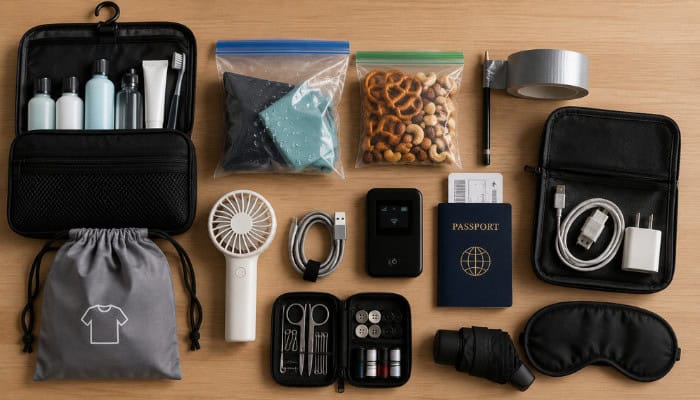
What’s more, your phone charger cable will likely break at the worst possible moment, so it’s best to carry a backup. If you travel frequently, a portable Wi-Fi hotspot keeps you connected during long flights with spotty internet.
We’ve seen grown adults cry actual tears when their phone dies right before boarding because they forgot to pack a spare charger.
Here are some essential items most people forget:
- Collapsible laundry bag for dirty clothes
- Small portable fan for stuffy rooms
- Backup phone charging cable
- Travel-sized sewing kit for quick fixes
Besides saving you from stressful situations, these items take up almost no space but solve many problems when they happen. When travel plans go sideways, you’ll be the prepared one while others scramble for solutions.
Since you now have the right items packed efficiently, the final step involves some insider strategies that make everything come together seamlessly.
Pro Tips for a Hassle-Free Trip
Now that you’ve got all the right items sorted, these final strategies will make sure nothing catches you off guard. Things like document safety and backup plans might seem boring, but they’re what save your trip when unexpected problems pop up. When you get these basics right, everything else falls into place naturally.
Here are the essential finishing touches every traveller needs:
- Securing Valuables: While most people focus on what to pack, they forget about keeping their important items safe during travel. The best approach is to carry your most valuable items in multiple locations rather than putting everything in one bag. This way, if something goes missing, you still have backup items to keep your trip on track.
- Document Organisation: In case you lose your main documents, always keep copies stored separately from the originals. Your passport should have a photocopy kept in a different bag, and your travel insurance details should be saved on your phone so replacements are faster if anything is lost.
- Final Essentials: Always pack a small amount of toilet paper in your carry-on because you never know what you’ll find at your destination. Your flight might get delayed, and airport facilities aren’t always well-stocked when you need them most.
One of our clients shared his experience from a business trip to Bangkok with us. Turns out, his hotel ran out of toilet paper on a Sunday when shops were closed, and that small pack he brought saved his entire weekend.
Who knew such a basic item would save his entire business trip?
Travel Like a Pro From Day One
Packing disasters are really common when you’re rushing to leave or don’t have a proper system in place. But with the right essentials and good planning, you can avoid the stress that ruins so many trips. These proven strategies work for any trip, whether you’re flying across town or around the world.
We’ve covered everything from organisation systems and multi-purpose clothing to unconventional items that solve unexpected problems. Plus, you’ve learned how to secure valuables and prepare proper documentation for worry-free travel.
Ready to make your next journey stress-free? Park & Fly takes care of your airport parking needs, so you can focus on perfecting your packing skills.
Book your Sydney airport parking today.
Disclaimer
This article is for general information only. It does not take into account your personal objectives, financial situation, or needs, and should not be relied upon as financial advice. Park & Fly is not licensed to provide insurance or financial product advice. Before making any decision about travel insurance, you should read the Product Disclosure Statement (PDS) and Target Market Determination (TMD) for the relevant policy and consider seeking advice from a licensed provider.