Welcome to our guide on travel scams protection and how insurance can help.
We’re Park & Fly, and we move thousands of Australian travellers through Sydney Airport every year. Some travellers have shared stories with us about overseas scams, including skimmed cards and fake accommodation listings that disappeared after the deposit was paid.
In this guide, we’ll cover:
- The most common scams Australian passengers experience in foreign countries
- What your travel insurance covers and what it doesn’t
- How to file a claim after a scam
- What travel insurance fraud is and why it’s important
- How to protect yourself before you leave Australia
Read on to make sure your next trip abroad doesn’t end with scammers taking all your money and a lesson learned the hard way.
What Travel Scams Do Australian Travellers Face Most Often?
Australian travellers face taxi, skimming, QR code, visa, and accommodation scams most often overseas. Since the scammers are good at what they do, these scams don’t always look obvious. So it’s important to know what’s out there before you reach your destination.
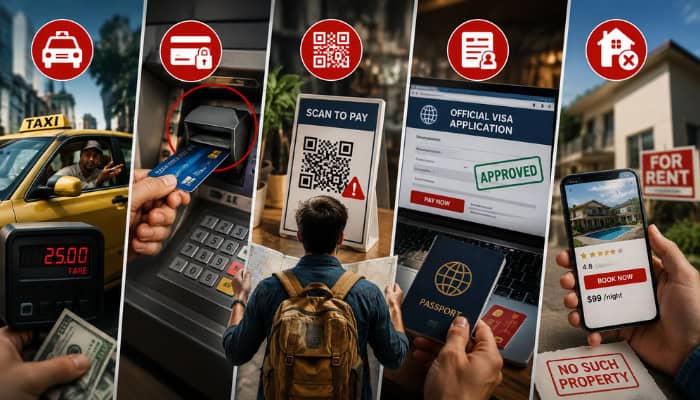
Here’s a breakdown of the most common scams that target travellers:
- Taxi and Overcharging Scams: Drivers in popular tourist spots will often rig their meter or ignore it entirely. They’ll also quote a flat rate that’s well above the going fare. This long-running scam still costs travellers money every day.
- Credit Card Skimming: Hidden devices installed on ATMs and payment terminals copy your card data without you realising it. Your bank account may already be compromised by the time you notice unauthorised charges.
- QR Code Scams: Fraudulent QR codes placed over legitimate ones send you straight to a fake payment page. You’ll think you’re paying for a meal or a museum ticket, but your personal details and payment info will go directly to scammers when that happens.
- Fake Visa and Document Sites: These websites mimic official government pages and charge fees for visas that are either fake or never arrive. Travelling on a fraudulent visa can get you detained or deported. That’s why the Australian Government’s Smartraveller warns Australians to only apply through embassy-recommended channels.
- Fake Accommodation Listings: Scammers post convincing rental listings on major booking platforms, collect your deposit, then vanish. When you arrive at the hotel or property, you discover that it doesn’t exist, and your money is gone.
Most travel scams work because scammers pressure travellers to act quickly without checking the details.
How Does Travel Insurance Protect You From Travel Scams?
Travel insurance can protect you from some travel scam losses by covering theft, stolen cards, and certain emergency expenses. However, coverage depends on the type of scam involved and the terms of your policy.
We’ll now explain what’s covered in your travel insurance, what’s not, and how to file a claim.
What Travel Insurance Covers
The right travel insurance policy can save you thousands of dollars if your cards or belongings are stolen overseas. Most comprehensive policies cover theft and stolen items during your trip. That means if your luggage is taken or your wallet’s pinched on the train, there’s a good chance your insurer will cover it.
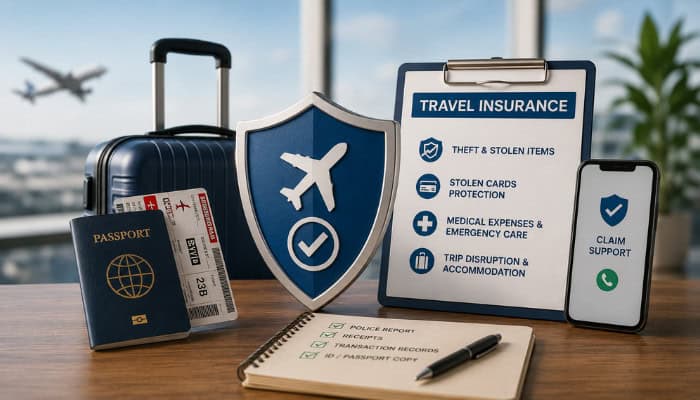
That said, a stolen credit card that’s used later fraudulently is also covered by some policies, but not all of them. It depends on your level of cover, so it’s worth checking your product disclosure statement before you travel (some policies apply strict reporting time limits).
The insurer may also cover emergency accommodation and medical costs if your trip is disrupted by a delay or a medical emergency overseas.
What Travel Insurance Does Not Cover
Most travellers assume insurance covers everything, but scam-related losses are full of exceptions. For example, most travel insurance policies exclude taxi scam losses. Insurers often treat these situations as the result of a commercial dispute rather than an insured event.
Pre-departure visa scam losses are usually excluded from travel insurance policies, too. That’s because most insurers only cover events that happen after your trip has started.
And if you handed cash over voluntarily, even under pressure, policy providers won’t cover that loss in most cases. Instead, they consider it a judgment call instead of an unforeseen loss.
Steps to File a Claim After a Scam
You need to contact your provider as soon as possible after reporting the scam to the police. Smartraveller recommends you report to local police or local authorities first and always request a written copy of the report. Your insurer will ask for that document.
Suppose your bank card was skimmed at an ATM in Bali and you notice unauthorised charges the next morning. Your first call should go to your bank or financial institution to block the card and stop further losses.
You should contact your insurer next, gather your receipts, transaction records and police report. Then submit your insurance claim with all supporting documents as quickly as you can.
Quick Travel Advice: Keep digital copies of your passport, travel insurance policy, and bank contact numbers stored separately from your main device. If your mobile phone is lost or compromised overseas, you’ll still be able to access important information quickly.
How Can You Protect Yourself From Scams Before You Travel?
You can reduce your risk of travel scams by preparing your travel plans before departure and researching common scams at your destination. A few basic precautions with your money and personal information can also make you a harder target while travelling.
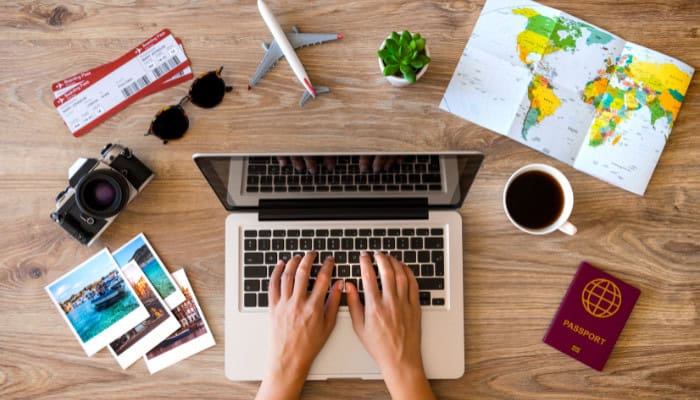
These four steps can help protect you before departure:
- Read Your Travel Insurance Policy: You should go through your travel insurance policy and check exactly what’s covered before you leave Australia. We recommend paying close attention to exclusions around scams, stolen cash, and pre-departure losses. This way, there will be no surprises when you need to file a claim.
- Research Common Scams at Your Destination: Every destination has its own set of common scams. Smartraveller publishes country-specific travel advice that covers known scams, local laws, and local customs worth knowing before you arrive.
- Carry a Money Belt: Petty theft and pickpocketing are more common around busy tourist areas and crowded public transport options. A concealed money belt makes you a harder target for pickpockets.
- Set Up Bank Account Alerts: Contact your bank or financial institution before departure and enable real-time transaction alerts. It’ll help you detect suspicious activity immediately if your card details are compromised overseas.
From what we’ve seen, scammers often exploit moments when travellers are unfamiliar with local processes or pricing.
How Does Travel Insurance Fraud Impact Policyholders?
Travel insurance fraud increases premiums and affects policy costs across the industry. It also has consequences beyond the person making the false claim, particularly for honest policyholders and insurers.
As a traveller, it’s important to know what actually counts as fraud and who ends up paying for it. Let’s take a closer look at both.
What Counts as a Fraudulent Claim
A fraudulent claim refers to any false, exaggerated or fabricated loss submitted to an insurer for financial gain. For instance, some travellers inflate the value of stolen items when filing a claim. A $200 AUD camera doesn’t become a $1,500 AUD camera just because it’s gone missing.
And things become worse if someone completely fabricates a loss.
Under Australian law, insurance fraud is a criminal offence, and serious cases can carry penalties of up to 10 years’ imprisonment (a rejected claim can affect future insurance applications as well).
Ultimately, misleading information on a claim is fraud, full stop.
Expert Insight: Travel insurers often assess stolen item claims against the original purchase price, age, depreciation, and proof of ownership
How Fraud Hurts Honest Policyholders
Every fraudulent claim filed pushes the cost of insurance higher for travellers who do the right thing. Travel insurers absorb the cost of fraudulent claims each year, and that expense gets passed straight back to policyholders through higher premiums.
In fact, the Insurance Council of Australia estimates that undetected insurance fraud costs the industry around $400 million every year.
Fraud also creates more scrutiny around genuine claims. That’s why many honest travellers face delays and disputes over claims to which they’re fully entitled.
Final Tips for Safe and Scam-Free Travel
Travel scams are a real risk for Australian travellers, but you can avoid most of them with the right preparation. If you know the common scams at your destination and understand what your travel insurance actually covers before departure, you’ll be better prepared while travelling.
You should also set up bank alerts, as they can help you respond quickly to suspicious activity overseas. And if something does go wrong, always act quickly. Report it to local police, contact your bank, and call your insurer immediately.
Flying out of Sydney soon? Book secure and convenient airport parking with Park & Fly before your trip.
Frequently Asked Questions (FAQs)
Travel scams can happen even when you’ve done your research and booked everything properly. These FAQs cover extra safety tips, overseas risks, and travel insurance details that Australian travellers often ask about before departure.
Should You Avoid Using Public Computers While Travelling?
Yes. Public computers can expose your bank account details, passwords, and travel documents to scammers. If you need emergency access abroad, use private browsing mode and avoid logging into your bank or financial institution where possible.
Why Do Scammers Target Travellers During Major Events?
Major events create crowds, confusion and rushed decisions, which scammers love. Australian travellers should stay alert when booking accommodation, paying for transport or scanning QR codes in busy tourist areas overseas.
Can Trusted Neighbours Help Protect Your Home While You’re Overseas?
Definitely. Trusted neighbours can collect parcels, move bins and report suspicious activity while you’re abroad. It’s a simple way to improve security and reduce the risk of theft during longer trips.
Why Is It Important To Stay Alert Around Public Places Overseas?
Busy public places like train stations, markets and tourist attractions are common targets for theft scams. Stay alert when carrying money, using your passport or checking travel documents in crowded areas.
Does Travel Insurance Cover Changes Between Most Countries?
Yes. Travel insurance cover can vary between most countries depending on local risks, government advice, and insurer policies. Some destinations may have limited cover for travel disruption, theft or emergency medical expenses.
What Health Precautions Should Travellers Take Before Overseas Trips?
Health risks vary between countries, so travellers should research local health advice before departure. It’s also wise to carry emergency contacts, backup medication, and copies of your travel insurance policy while abroad.
Disclaimer: This article is for general information only. It does not take into account your personal objectives, financial situation, or needs, and should not be relied upon as financial advice. Park & Fly is not licensed to provide insurance or financial product advice. Before making any decision about travel insurance, you should read the Product Disclosure Statement (PDS) and Target Market Determination (TMD) for the relevant policy and consider seeking advice from a licensed provider.